

Mado Egypt Menu Shoot – Commercial food photography Cairo
April 29, 2026A Food Photography Journey Through Haute Cuisine, Fine Dining & International Flavours on Egypt’s North Coast
The Assignment
Every once in a while, a project lands in your lap that doesn’t feel like work — it feels like an
experience. Photographing Le Rouge, a distinguished fine dining restaurant nestled in the
heart of Egypt’s North Coast, was exactly that. This is the story of a food photography session
that pushed the boundaries of haute cuisine visual storytelling, where every frame had to
reflect the soul of an establishment that takes international cuisine as seriously as it takes
atmosphere.
Le Rouge isn’t just a restaurant — it’s a destination. Set within a sprawling outdoor courtyard flanked by stone
columns and swaying palms, and anchored by an intimate indoor dining hall that oozes old-world European
grandeur, the venue draws some of Egypt’s most recognisable faces: singers, actors, public figures who
come not only for the food but for the nightly live entertainment that transforms dinner into theatre. Capturing
that duality — the elegance of fine dining alongside the energy of a live stage — was the central challenge of
this food photography project.

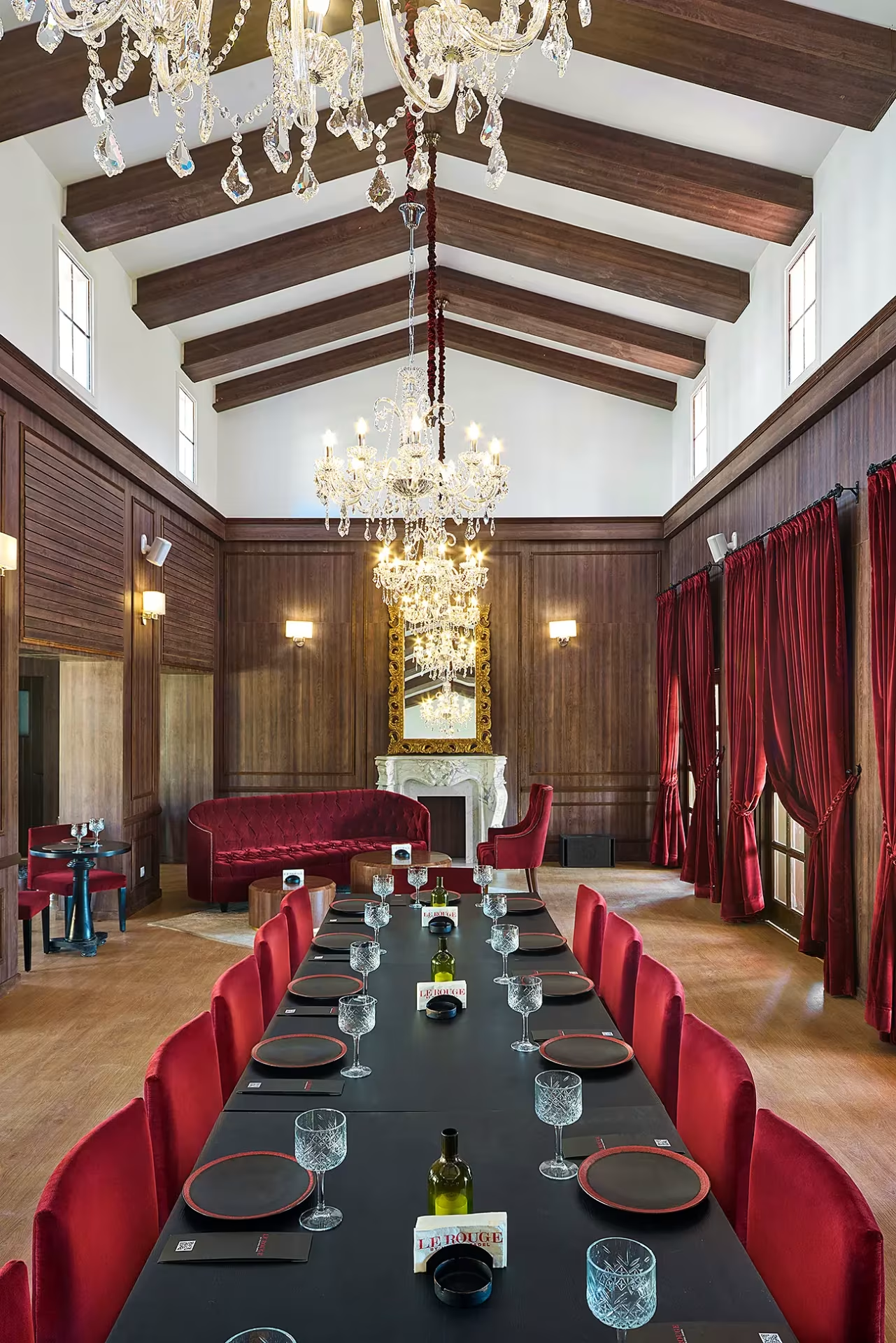
Left: The sun-drenched terrace during the golden hour. Right: The grand indoor dining hall with its signature crystal chandeliers.
The outdoor terrace, dressed in cream cushions and marble-top tables, transforms completely as night falls.
A glowing Le Rouge neon sign becomes the anchor of the space, while pendant lights strung between palm
trees cast everything in a warm, cinematic glow — the kind of scene that tells you this food photography
assignment would require as much environmental storytelling as it would dish-level detail.
Setting the Scene
Great food photography begins long before the first dish arrives at the table. Understanding
the venue’s visual identity — its textures, its palette, its rhythm of light — is what separates a
catalogue shot from a photograph that makes someone want to be there, in that seat, at that
exact moment.
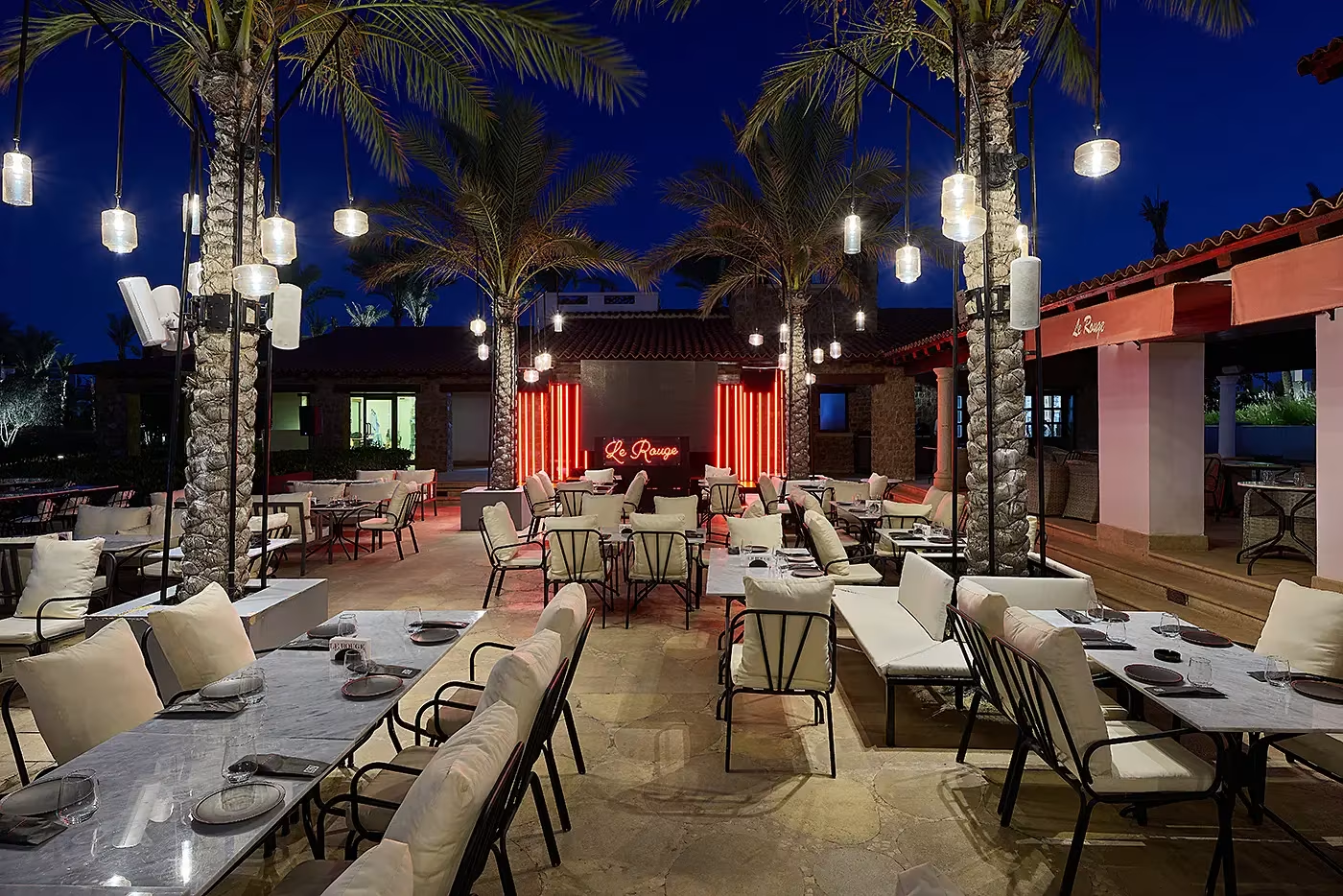
Le Rouge’s outdoor space is at its most photogenic during the blue hour — that brief window after sunset
when the sky deepens into cobalt and every artificial light source becomes a warm counterpoint. The neon
sign glows like an ember. The pendant lights above the marble tables create layered depth. For this food
photography session, the terrace shots were timed precisely to capture that fleeting balance between natural
and artificial light that gives fine dining photography its cinematic quality.
Inside, the story shifts entirely. The grand dining hall is a study in contrast: dark walnut panelling meets
soaring cathedral ceilings; velvet crimson drapes frame arched doorways; crystal chandeliers throw prismatic
light across a long banquet table set with black linen and cut-crystal glassware. For a food photographer, it’s
an environment that demands a considered approach — the rich, moody tones of this haute cuisine setting
call for a restrained use of supplementary lighting to preserve the room’s inherent drama.
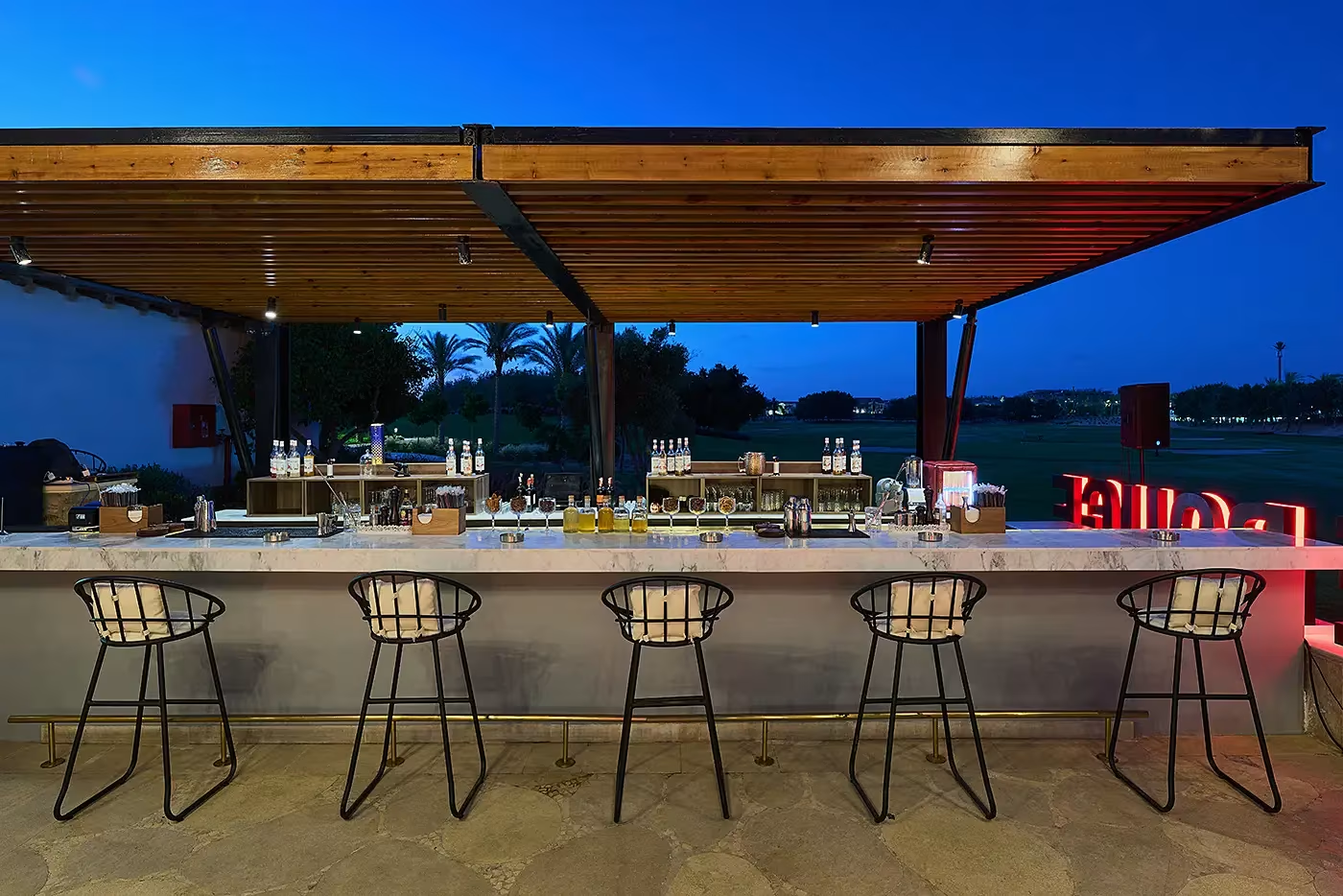
The outdoor bar, with its marble counter stretching into the night and its wooden pergola overhead, adds yet
another dimension to the space. It is here that guests begin their evening — a cocktail in hand before moving
to the terrace or the indoor hall. Photographing the bar as part of the overall food photography narrative
helped contextualise the dining experience within the broader world Le Rouge has built.
The Food: Where the Real Work Begins
Le Rouge’s menu is a confident journey through international cuisine, drawing on French,
Italian, and contemporary fine dining traditions without ever feeling derivative. The kitchen’s
approach to food styling speaks for itself — each dish arrives at the table as a composed
image, which is perhaps the finest compliment one can pay to a chef from a food
photographer’s perspective.
Starters & Small Plates
The starter menu at Le Rouge reads like a masterclass in the art of the small plate. Each dish is designed
with precision — layers of flavour and texture that reward close attention, both at the table and through the
lens. From a food styling perspective, the starters posed the most interesting challenge: how to convey
delicacy and complexity within a compact frame, against the moody backdrop of crimson velvet banquettes
and matte black surfaces that the kitchen team had curated specifically for this fine dining food photography
session.
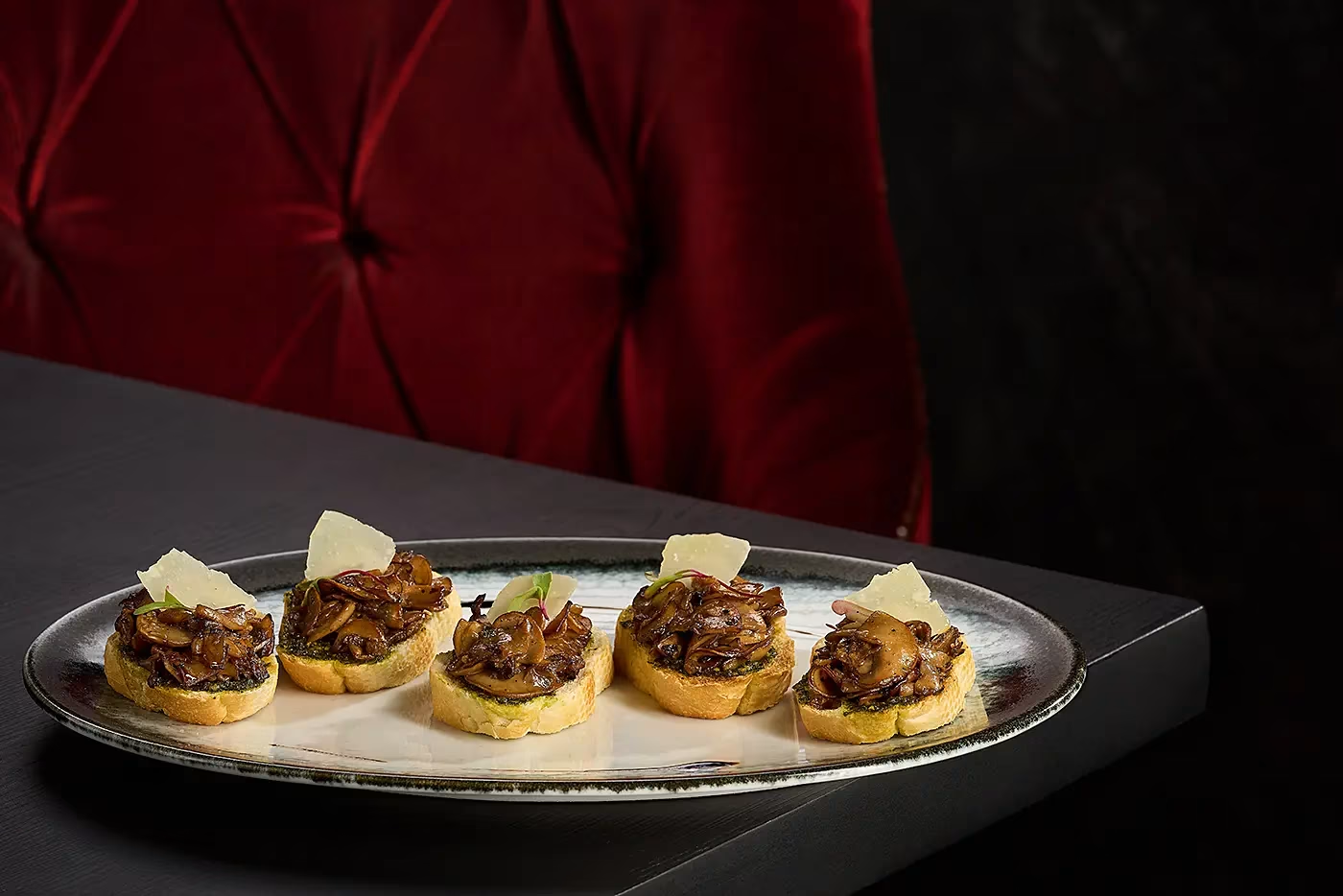

The Bruschetta Mushroom Bites — toasted crostini crowned with caramelised wild mushrooms, wilted
greens, and delicate shavings of aged Parmesan — exemplify the restaurant’s approach to Italian-rooted
international cuisine: familiar in concept, refined in execution. Placed on an elongated ceramic platter, the five
bites formed a natural composition that needed almost no art direction, a testament to the kitchen’s inherent
food styling sensibility.
The Sliders — three compact wagyu-style beef burgers on sesame brioche, stacked on a slate serving board
— are the menu’s playful nod to casual dining elevated by fine dining technique. The gold cocktail picks and
the deep red upholstered booth behind them provided instant brand alignment within the frame.
Seafood Openers
Seafood starters are among the most technically demanding subjects in food photography. Their translucent
textures, delicate colour gradients, and tendency to dry out under studio lighting require both speed and
precision. Le Rouge’s seafood appetisers were styled by the kitchen with an expert hand, making the
photographer’s role one of composition and light management rather than intervention.

Paper-thin slices of cold-smoked salmon fanned across a stone-finish plate, garnished with briny capers,
lemon zest, pink peppercorns, and a small salad of dressed mixed leaves with a quenelle of cream cheese.
The deep charcoal serving board beneath adds the graphic contrast that makes this dish sing in a fine dining
food photography context.

Perhaps the most visually arresting starter of the session: gossamer-thin medallions of raw seabass fanned in
a perfect circle on a pool of creamy dressing, topped with a bright tangle of wild rocket, citrus zest, and a
scatter of vibrant green and red spice. Shot from directly overhead, this is the kind of image that defines haute
cuisine food photography — geometry, restraint, and colour working in unison.
The Tuna Duo
Two preparations of tuna occupied a central place in the starter menu, each showcasing a different facet of
Le Rouge’s international cuisine philosophy — one rooted in French bistro tradition, the other in
Japanese-inflected contemporary cooking.
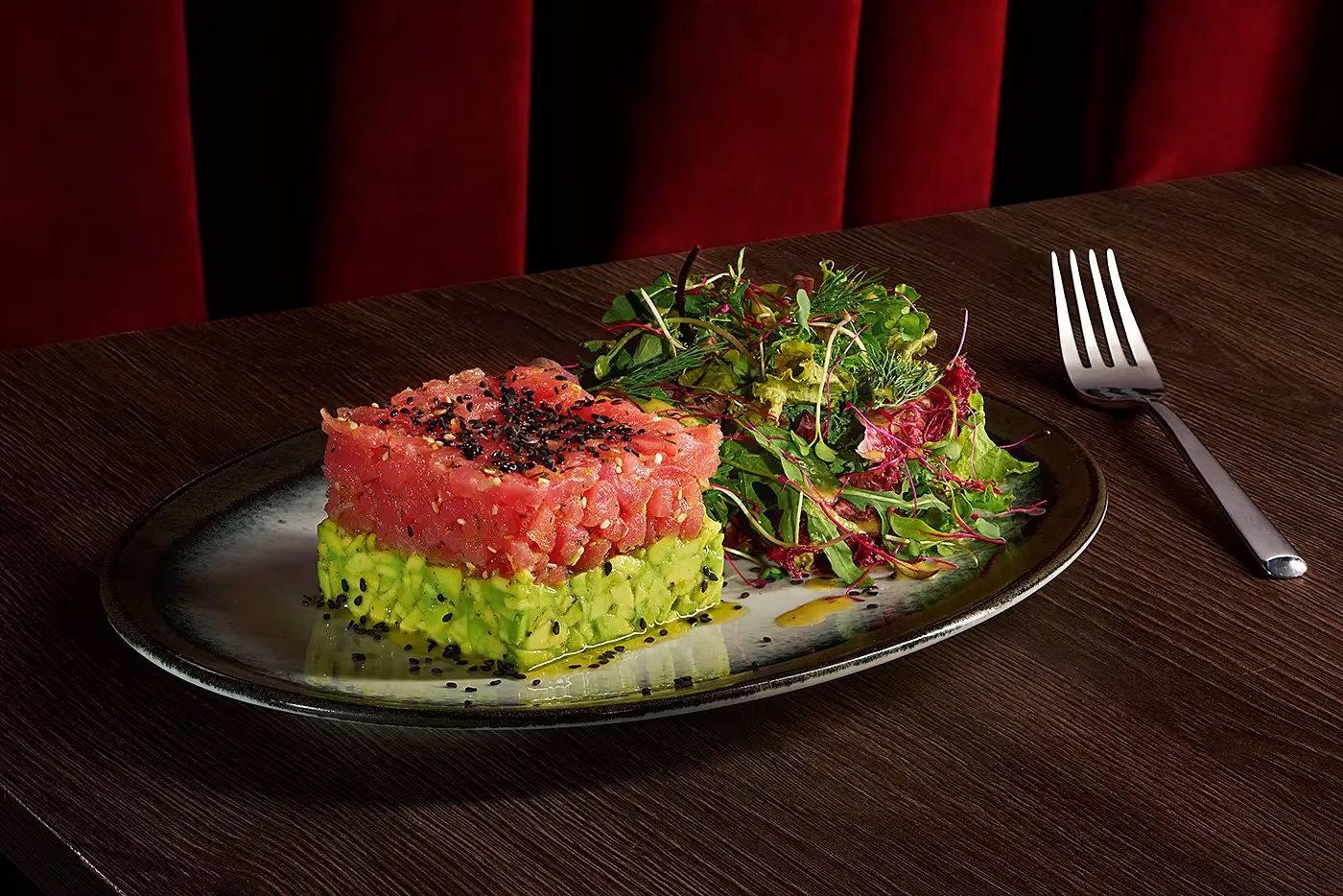
A classic of the fine dining canon, the tuna tartar arrived as a precisely moulded tower: a base of smooth
avocado purée supporting a crown of hand-cut yellowfin tuna seasoned with sesame and citrus, topped with
a tangle of micro-herb salad and a dusting of black sesame. Clean, architectural, and deeply photogenic —
this dish required minimal food styling intervention and maximum compositional confidence.
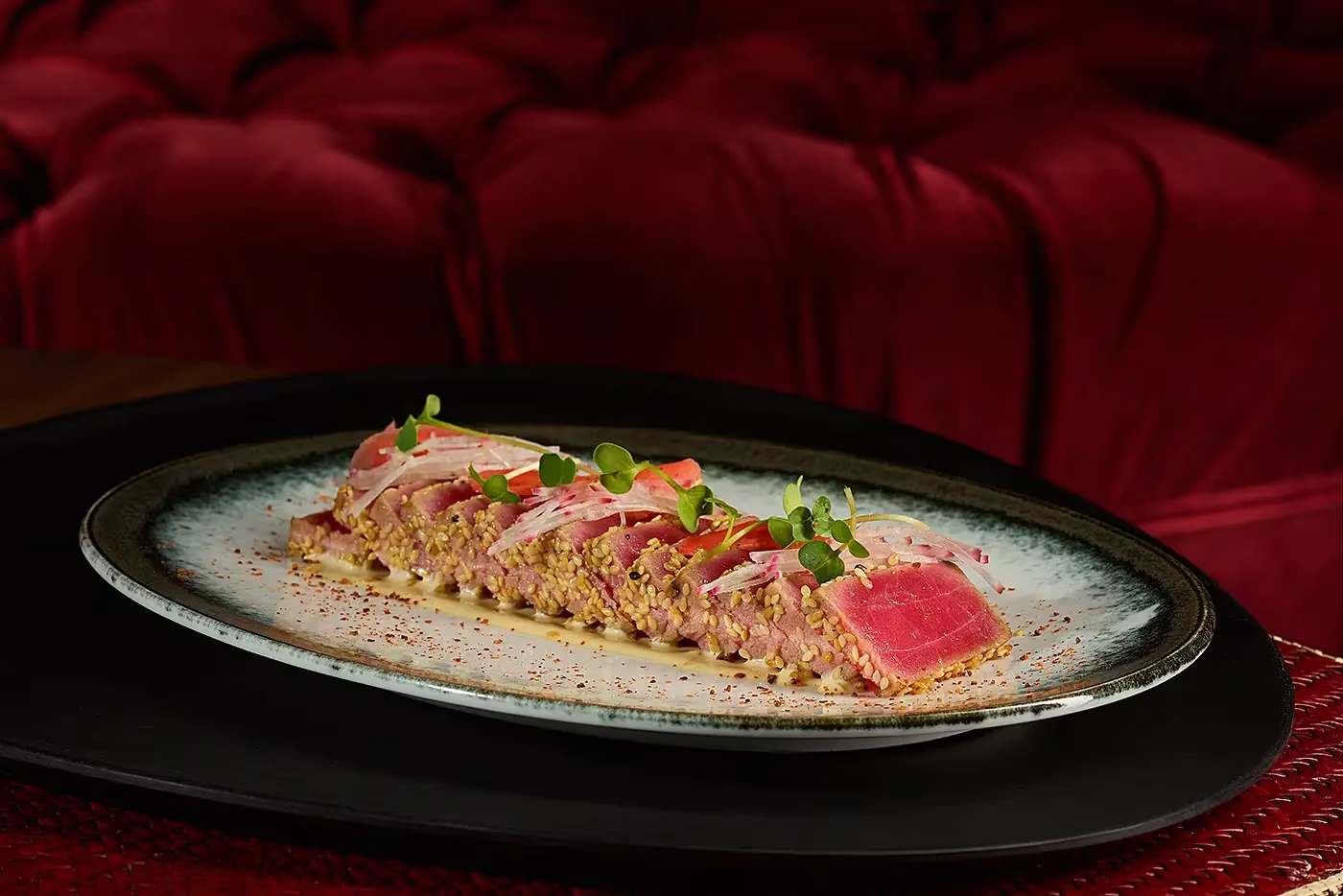
The tataki presented a contrasting visual language: a long, low arrangement of seared tuna slices encrusted
in toasted sesame, their vivid pink centre revealed against the muted ceramic of an oval plate. Pickled radish,
microgreens, and a scattering of spice dust completed the picture. In terms of food photography, the
elongated format rewarded a three-quarter angle that allowed the layering of colour and texture to read
clearly.
A Vegetarian Standout
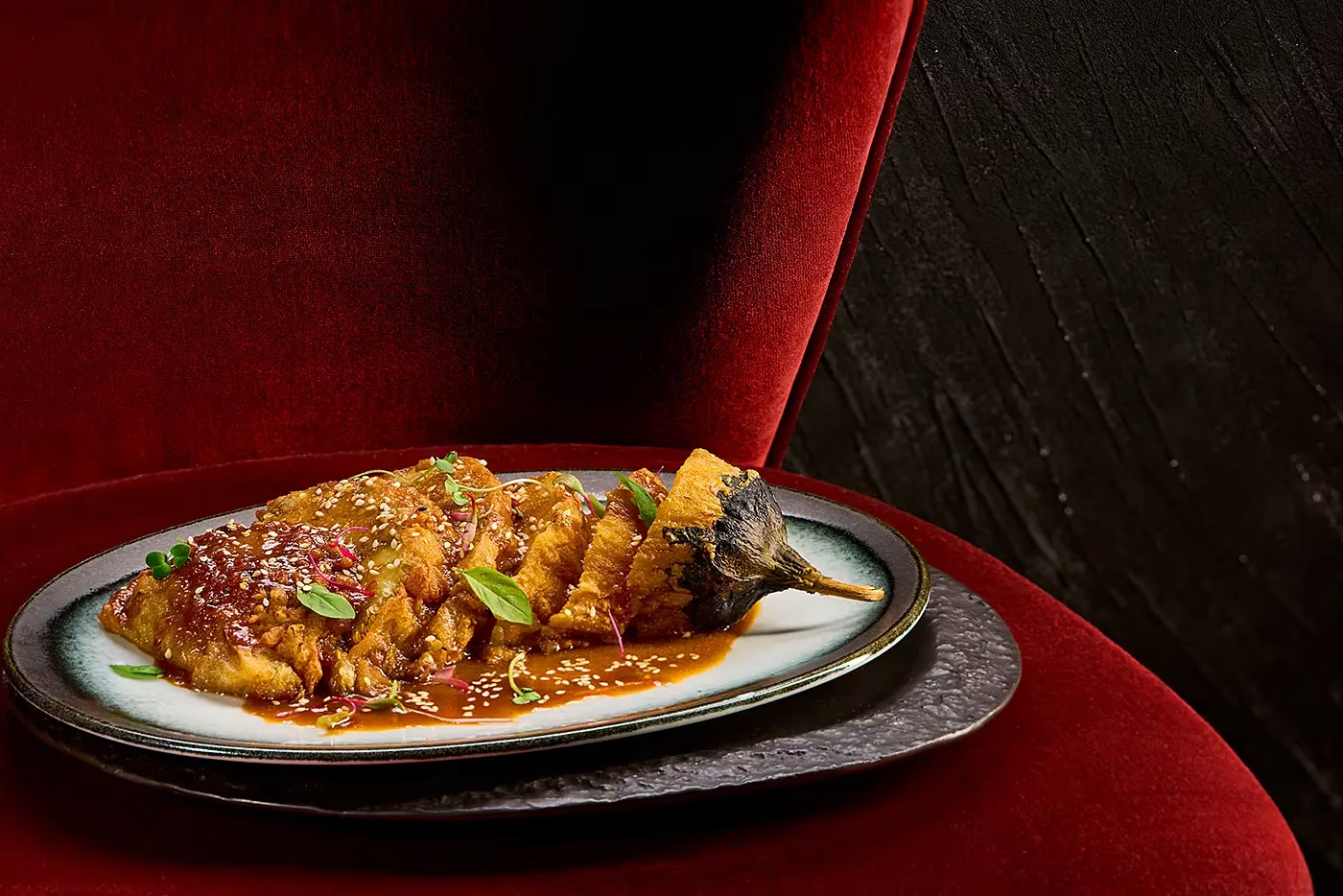
The Eggplant Tempura was the session’s most unexpected photographic challenge — and ultimately one of
its most rewarding outcomes. Whole aubergine, deep-fried to a lacquered crisp in a gossamer batter, was
served on a textured ceramic plate drenched in a glossy, sweet-spiced sauce scattered with toasted sesame
and microgreens. The contrast between the darkened, sculptural form of the eggplant and the vibrant sauce
pooling beneath it created a natural tension in the frame — the kind of visual drama that elevates food
photography from documentation to art. This dish, while vegetarian, held its own completely against the meat
and seafood plates in terms of visual impact.
Main Courses
The main course menu at Le Rouge is where the restaurant’s identity as a serious purveyor of
international fine dining cuisine is most fully expressed. Proteins are sourced with care,
preparations are classical, and the plating philosophy balances abundance with elegance — a
difficult equilibrium to achieve and an equally difficult one to capture in food photography.
From the Grill

The Rib Eye Steak is the unambiguous centrepiece of Le Rouge’s grill menu. Presented on a matte black
plate atop a circular wooden board, the bone-in cut arrived perfectly rested, crusted in sea salt flakes,
accompanied by a grilled garlic head, a sprig of rosemary, golden frites, and a small pot of mustard sauce. In
food photography terms, this is the kind of subject that demands a side-on three-quarter angle — close
enough to convey the caramelised crust and the blush of the interior, wide enough to include the supporting
elements that contextualise the dish within the language of haute cuisine.
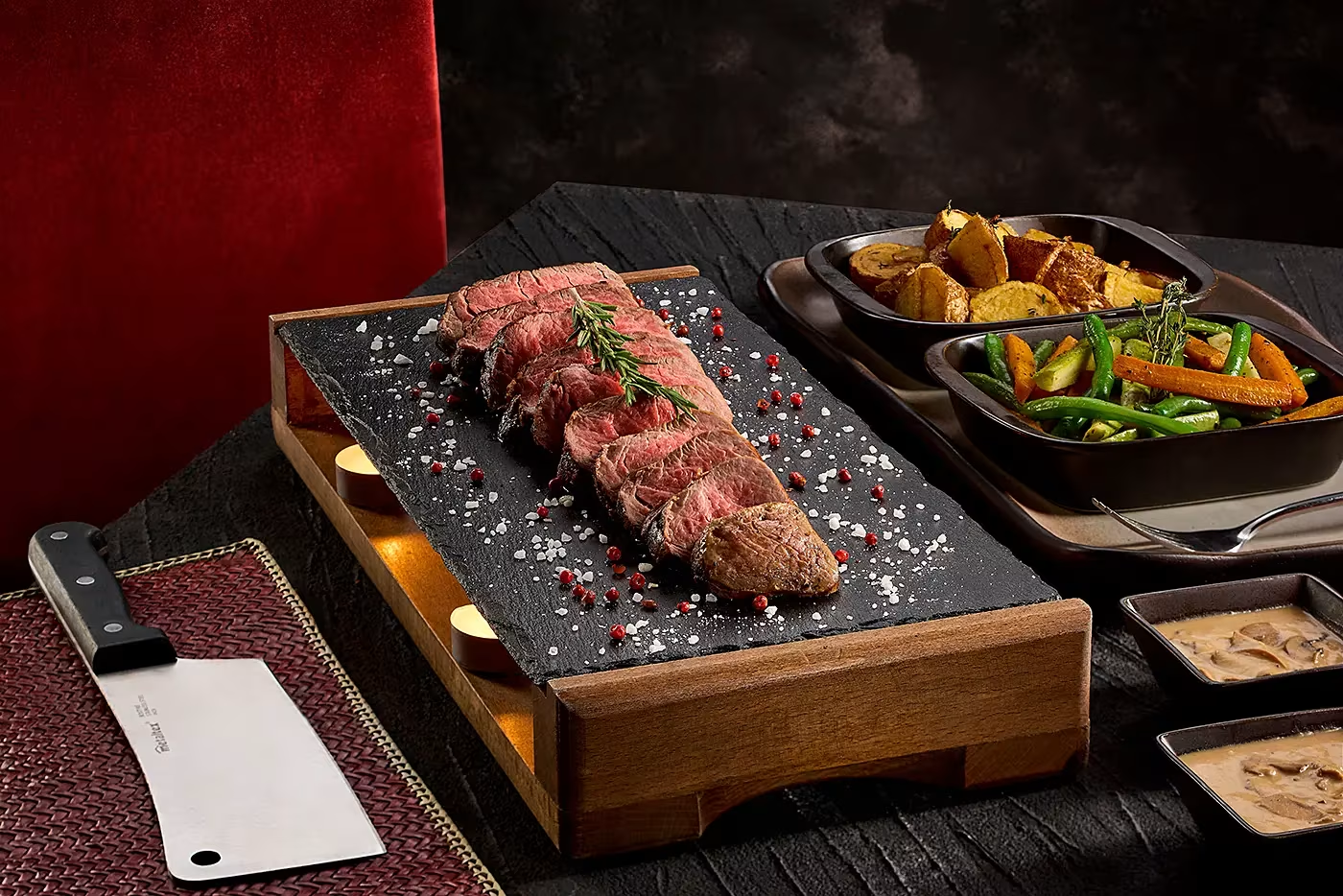
The Beef Casserole was presented with theatrical confidence: thick slices of slow-braised beef fanned
across a lit stone slab, dusted with coarse salt and pink peppercorns, served alongside a cast-iron dish of
roasted potatoes and a pan of charred seasonal vegetables. A cleaver rested beside the board — deliberate,
visual punctuation. For food photography, the challenge here was managing the warmth of the meat’s surface
against the cooler tones of the slate, while preserving the sense of generous, convivial fine dining that the
dish embodies.
From the Sea & the Pasta Kitchen
The Pan Seared Salmon demonstrated the kitchen’s lighter register — a thick fillet, skin crisped to a deep
mahogany, served over a bed of golden turmeric-spiced freekeh, surrounded by slow-roasted cherry
tomatoes, capers, wilted spinach, and a scattering of micro herbs. A small hammered metal bowl of warm
sauce sat alongside. The deep red backdrop panel and the textured matte plate created a richly chromatic
composition — a fine dining photograph built on complementary colours as much as culinary craft.

The Ravioli was an exercise in restrained elegance — hand-made pasta parcels bathed in a cream sauce
infused with saffron, garnished with toasted almond flakes and a dramatic crown of fresh basil leaves. Shot
from directly above to reveal the geometry of the composition, this was the most food-styling-intensive shot of the session: every almond sliver, every strand of saffron, every leaf positioned with care to achieve a visual
balance that felt organic rather than engineered. The result is a food photograph that speaks equally to the
traditions of Italian haute cuisine and to the contemporary fine dining aesthetic Le Rouge inhabits.

The Sweet Finale
A fine dining experience is only as complete as its final act — and Le Rouge’s dessert menu
does not disappoint. For the food photography session, desserts were the last to be shot, by
which point the ambient light had shifted to its warmest evening register, lending the final
frames a golden, almost nostalgic quality entirely in keeping with the subject matter.
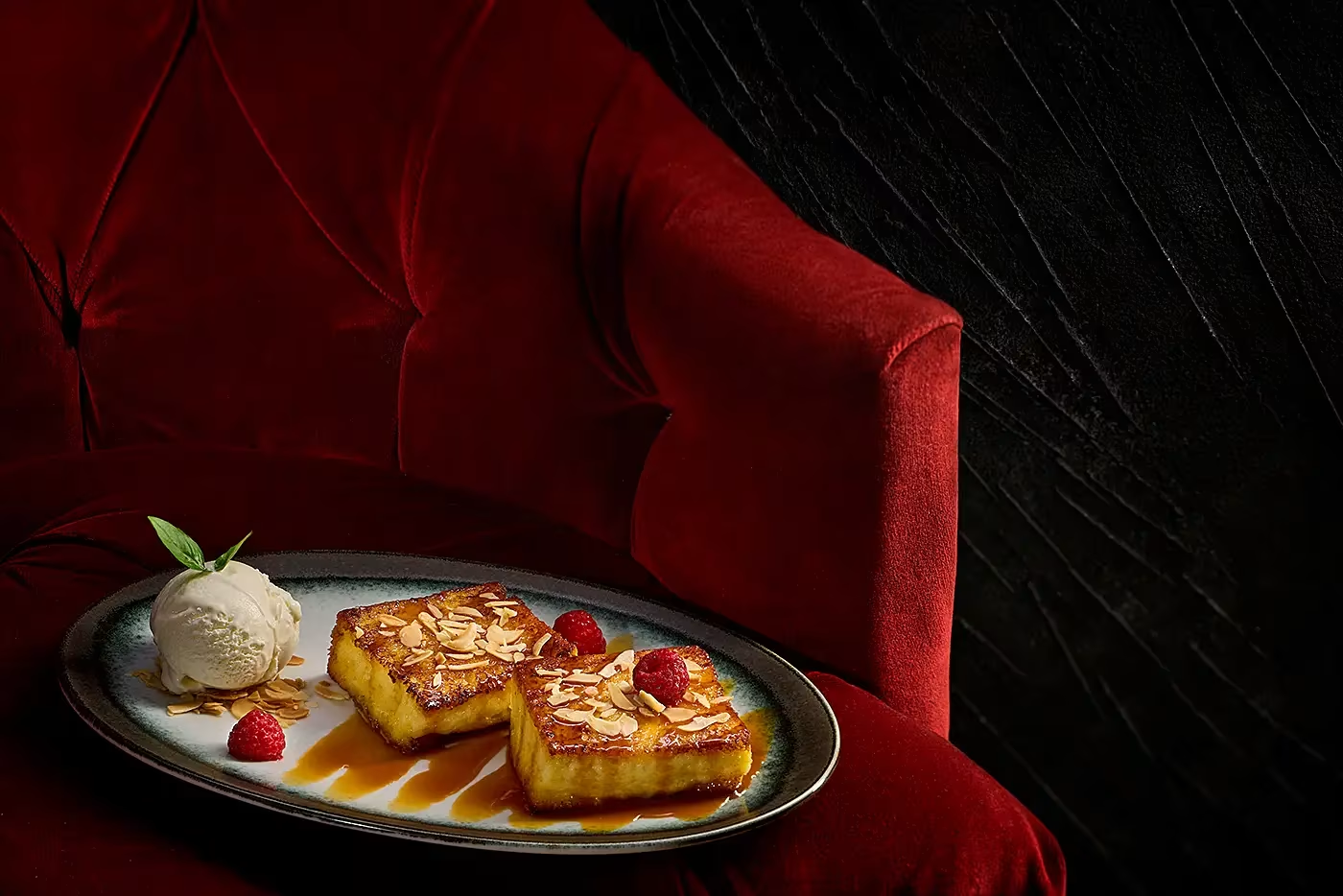
The Pain Perdu — French for ‘lost bread’, the Gallic ancestor of the brioche French toast — arrived as two
golden rectangles of oven-baked brioche, their surfaces caramelised to a deep amber and scattered with
flaked almonds and fresh raspberries, pooled in a glossy caramel sauce. A perfect scoop of vanilla ice cream
completed the plate. Placed on the signature crimson velvet banquette for this shot, the warm amber tones of
the dessert radiated against the deep red upholstery — a food photograph that feels as indulgent to look at as
the dish tastes. As a closing image for a food photography project rooted in haute cuisine and fine dining
storytelling, it was the natural, inevitable choice.
Final Thoughts
What makes a food photography project truly memorable is rarely the individual dish or the
single standout frame. It is the coherence of the visual world that emerges across a full
session — the sense that every image, whether it shows a plate of tuna tartar or a blue-hour
terrace, belongs to the same story.
Le Rouge provided exactly that kind of coherence. The restaurant’s identity — unapologetically glamorous,
deeply serious about its international cuisine, and built around the idea that dining is a complete sensory
experience — translated into a food photography brief with unusual clarity. The velvet, the stone, the neon,
the marble, the chandelier light, the seared crust of a rib eye and the translucent slice of seabass carpaccio:
all of it spoke the same visual language, one that this project aimed to honour with every frame.
For anyone seeking fine dining food photography, haute cuisine visual storytelling, or a photographer fluent in
the grammar of international cuisine and food styling, projects like Le Rouge are the benchmark. They remind
you why this discipline, at its best, is not just commercial work — it is a form of portraiture: of a place, a
philosophy, and the people who bring extraordinary food into the world.
“Interested in a similar project? Get in touch to discuss your brand’s food photography needs.”


